Can Dogs Eat Onions or Garlic?
No. Onions, garlic, leeks, and chives all contain compounds that damage red blood cells in dogs and cats — and the effect builds up over time.
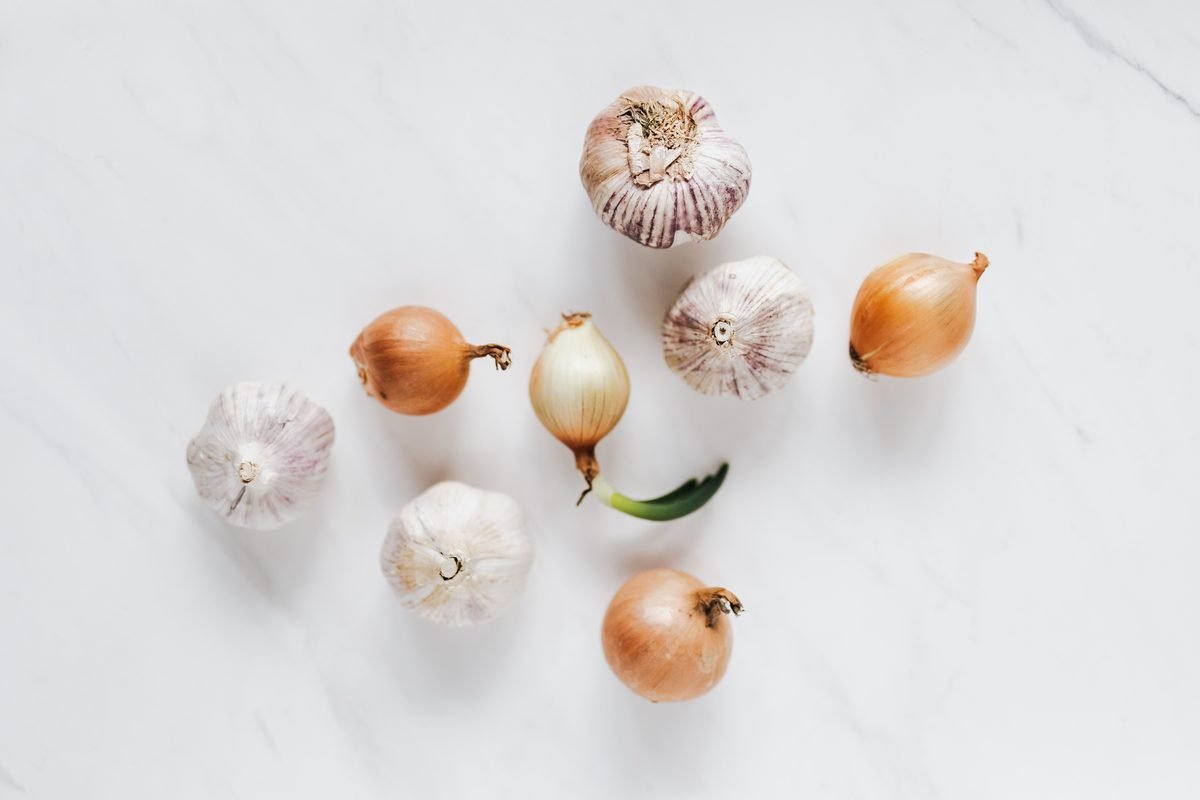
No. Both are toxic to dogs, and the effect is cumulative. Onions, garlic, leeks, chives, shallots, and scallions all belong to the allium family, and all of them damage a dog's red blood cells. Unlike a simple stomach upset, the damage builds over repeated small exposures, which means regular table scraps are genuinely dangerous even when no single meal causes visible symptoms.
Call your vet, an emergency clinic, or a poison control line straight away. Do not wait for symptoms, and do not make your dog vomit unless a professional tells you to.
ASPCA Animal Poison Control: (888) 426-4435 · Pet Poison Helpline: (855) 764-7661 · both charge a consultation fee and are available 24/7.
How allium poisoning works
Alliums contain organosulfur compounds, notably N-propyl disulfide and related thiosulfates. In dogs these cause oxidative damage to hemoglobin inside red blood cells. The damaged hemoglobin clumps into structures called Heinz bodies, and the body then destroys those cells.
The result is hemolytic anemia: the dog runs short of functioning red blood cells and cannot carry oxygen properly. Severe cases require blood transfusion.
Cooking does not help
This surprises people. Cooking, drying, powdering, and processing do not destroy the toxic compounds. Powdered forms are more concentrated and more dangerous by weight than fresh, which makes onion powder and garlic powder particularly hazardous.
That matters because powdered alliums are in an enormous range of everyday foods.
Where they hide
- Gravy, stock cubes, and broth
- Soups and stews
- Pizza, pasta sauce, and most Italian dishes
- Chinese, Indian, Thai, and Mexican takeaway
- Baby food — a classic and dangerous source, since people feed it to sick dogs
- Seasoned meats, marinades, rubs, and rotisserie chicken
- Chips, crisps, crackers, and savory snacks with onion or garlic flavoring
- Garlic bread
- Some "natural" flea remedies and garlic supplements marketed for dogs
On that last point: garlic is sometimes promoted as a natural flea treatment. Do not do this. There is no good evidence it works, and you are deliberately giving a dog a substance known to damage its red blood cells.
Symptoms, and the delay that catches people out
This is the most important practical detail. Signs of anemia typically do not appear for one to several days after ingestion, because the red blood cells have to be damaged and then cleared. Gastrointestinal upset may come sooner.
Watch for:
- Vomiting, diarrhea, and abdominal pain in the first day
- Lethargy and weakness
- Pale or white gums
- Rapid breathing and elevated heart rate
- Reduced appetite
- Red or brown urine, which indicates red blood cell breakdown
- Collapse in severe cases
A dog that seems fine the evening it ate onion is not in the clear. That is exactly the pattern.
Some dogs are more sensitive
Japanese breeds, including Akitas and Shiba Inus, carry an inherited red blood cell trait that makes them notably more susceptible to allium toxicity. If you have one of these breeds, treat any exposure as more serious. Cats are more sensitive than dogs generally.
What to do
Call your vet or a poison control line with the dog's weight, what it ate, roughly how much, and when. Keep the packaging. Do not induce vomiting on your own.
Treatment depends on timing. Early on, a vet may induce vomiting and give activated charcoal. After that it is supportive: intravenous fluids, repeated blood work to track red blood cell counts over several days, oxygen if needed, and transfusion in severe cases. Most dogs recover with prompt treatment.
When to call your vet
Call for any known ingestion, including small amounts and including cooked or powdered forms. Call urgently for pale gums, weakness, red or brown urine, rapid breathing, or collapse. Because symptoms are delayed, monitor for several days after any exposure rather than assuming an uneventful first evening means all is well.
Sources
Common questions
How much onion or garlic is toxic to a dog?
Harm is dose-dependent and cumulative, and sensitivity varies by breed, so there is no safe amount worth calculating at home. Powdered forms are more concentrated than fresh. Call your vet with your dog's weight and what it ate rather than estimating.
Is garlic safe for dogs in small amounts as a flea remedy?
No. There is no good evidence garlic works as a flea treatment, and it means deliberately and repeatedly giving a dog a substance that damages red blood cells. Use a veterinary flea product instead.
My dog ate onion yesterday and seems fine. Should I still worry?
Yes, keep monitoring and call your vet. Signs of anemia typically take one to several days to appear because the red blood cells must be damaged and then cleared, so an uneventful first day is not reassurance.