Why Does My Dog Stare at Me?
Usually it's affection or communication, not a problem — dogs stare at people for a handful of well-understood reasons.
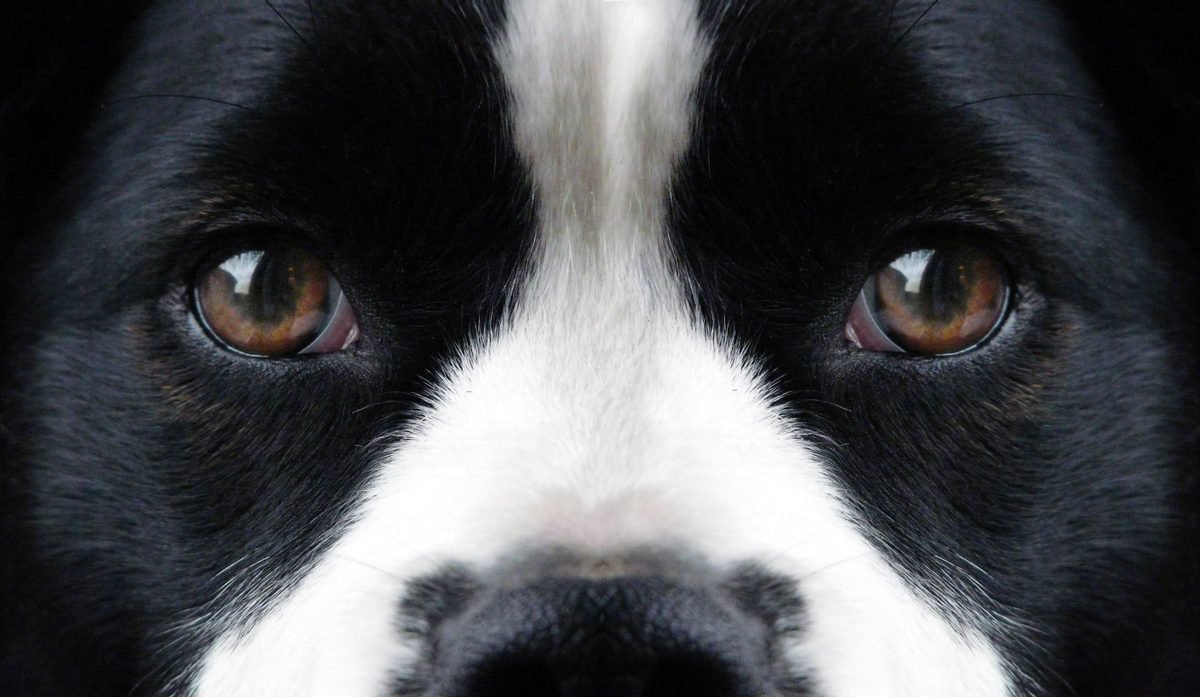
A dog holding eye contact with you is doing something genuinely unusual among animals. Sustained staring between most species is a threat, and between two unfamiliar dogs it still is. That domestic dogs stare at their owners affectionately is a product of living alongside humans for thousands of years.
New or increased staring in an older dog is worth paying attention to. See what your dog's age works out to in human years, and when senior begins for their size.
Dog Age Calculator →They want something, and they know staring works
The most common reason is a request. Food, a walk, a door, a toy under the sofa, or your attention. Dogs are excellent at reading human focus, and a dog that has learned staring gets a response will use it deliberately.
Watch what happens after you make eye contact. A dog that immediately looks at the door, the lead, or its bowl and back at you is directing your attention, and that back-and-forth glance is a real communicative signal rather than coincidence.
Affection and bonding
Mutual gaze between dogs and their owners is associated with increased oxytocin in both, the same hormonal system involved in other social bonds. This appears to be something dogs developed during domestication; hand-raised wolves do not engage in it the same way.
A soft stare from across the room, with relaxed eyes, a loose body, and perhaps a slowly wagging tail, is companionable rather than demanding. It does not require a response.
Reading you for cues
Dogs watch humans closely for information about what is going to happen next. Picking up keys, putting on particular shoes, closing a laptop, or standing up in a specific way all predict outcomes the dog cares about. A dog that stares whenever you shift position is tracking those cues.
Dogs are also unusually good at following human pointing and gaze direction, which is why the staring often precedes checking wherever you are looking.
Confusion during training
A dog that stares blankly mid-training session is often not being stubborn. It has not understood the cue, or the cue has changed slightly, or it has been asked for something it does not have a clear behavior for. Staring in that context is a dog waiting for more information.
The fix is to make the request easier rather than repeating it more firmly.
Guarding behavior
Staring while eating, or over a toy, bed, or chew, is a different signal entirely. Resource guarding usually comes with a stiff body, a lowered head over the item, a hard unblinking stare, sometimes whale eye where the whites show, and possibly a low growl or freezing.
This is a warning, and the correct response is to give the dog space rather than to challenge it. Do not take the item, do not lean over the dog, and do not punish a growl, because punishing a warning teaches a dog to skip the warning next time. Resource guarding responds well to professional behavioral help and badly to confrontation.
Cognitive decline in older dogs
Senior dogs sometimes stare at walls, into corners, or blankly into space. Canine cognitive dysfunction is a recognized condition comparable to dementia, and disorientation of this kind is one of its signs, alongside disrupted sleep, house soiling in a previously reliable dog, and changes in interaction.
Staring at nothing in an older dog is not the same as staring at you, and it is worth raising with a vet rather than dismissing as age.
Hard stare versus soft stare
Learning the difference is genuinely useful. A soft stare has relaxed eyes, normal blinking, a loose mouth that may be slightly open, and easy body posture. A hard stare has a fixed unblinking gaze, tension around the eyes and muzzle, a closed tight mouth, a stiff still body, and often a lowered head.
A soft stare is an invitation. A hard stare is a request for distance, and closing that distance is how bites happen.
When to call your vet
Contact your vet if an older dog begins staring into space or at walls, if staring is paired with disorientation, circling, pressing the head against surfaces, or vision changes, or if guarding behavior is new or escalating. New neurological signs deserve prompt attention, and new aggression deserves both a medical workup and qualified behavioral help, since pain is a common and overlooked driver.
Sources
Common questions
Is it bad to stare back at my dog?
With your own relaxed, well-socialized dog, returning a soft gaze is a positive interaction. With an unfamiliar dog, or any dog showing a hard stare, tension, or guarding, direct eye contact reads as a challenge and should be avoided.
Why does my dog stare at me while eating or pooping?
During eating it is usually anticipation of food or leftovers. During toileting it is a vulnerability behavior: the dog is exposed and is watching you as the person it expects to notice danger. It is a sign of trust rather than anything strange.
Why does my dog stare at the wall?
Occasional interest in a wall usually means the dog heard or smelled something, such as pests inside it. Repeated, prolonged blank staring at walls or corners, especially in an older dog, can indicate canine cognitive dysfunction or a neurological problem and should be checked by a vet.