Puppy Age in Human Years
Puppies pack an enormous amount of aging into their first 24 months — here's what that actually looks like in human terms.
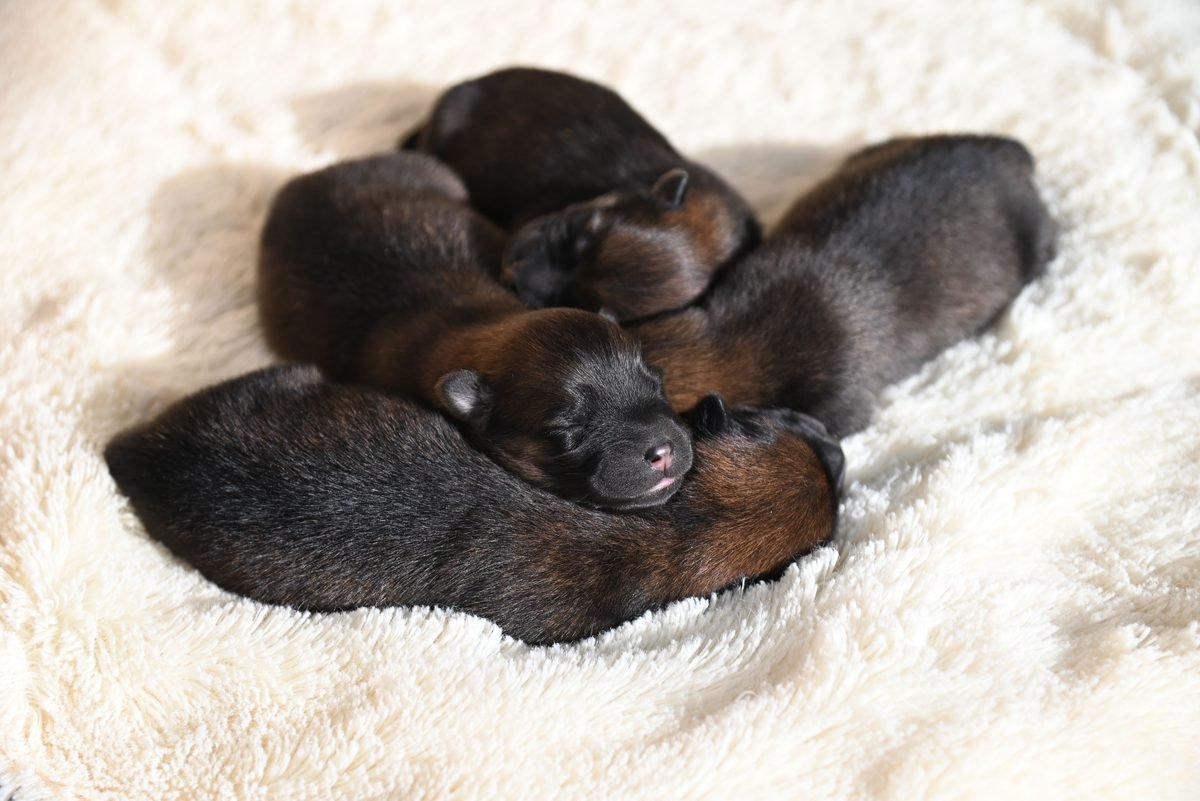
Enter your puppy's age (including months) to get their precise age in human years.
Calculate My Puppy's Age →Puppies age faster than the x7 rule suggests
The old "multiply by 7" rule badly undersells how fast puppies actually develop. A 6-month-old puppy isn't 3.5 in human years under that rule — but biologically, a 6-month-old puppy is already well into adolescence, with most of their growth plates closing and many breeds reaching sexual maturity. A more realistic estimate puts a 1-year-old puppy at around 15 in human years — comparable to a teenager, not a toddler.
Roughly what each stage looks like
- 0–2 months — infancy: nursing or weaning, minimal independent mobility.
- 2–4 months — early childhood: rapid learning, teething begins, primary socialization window.
- 4–6 months — equivalent to roughly human age 8–10: adult teeth coming in, growing independence.
- 6–12 months — adolescence: hits around human age 12–15, testing boundaries, often when training regresses temporarily.
- 12–24 months — young adulthood: by age 2, most dogs are around human age 24, physically mature though many breeds are still mentally maturing, especially larger ones.
Why size matters less in this window
Unlike adult dogs, where size drives most of the difference in aging speed, the first two years look fairly similar across small, medium, large, and giant breeds — everyone hits roughly age 15 at one year and roughly age 24 at two years. The size-based divergence becomes significant after age two, once growth slows and long-term aging patterns kick in.
Get an exact age for your puppy
Use the Dog Age Calculator for a precise human-year equivalent at any age, including fractional months. If you're also trying to gauge how big your puppy will get, the Puppy Weight Calculator estimates adult weight by breed. And for the full picture once your dog is past two, see How Old Is My Dog in Human Years? or the Dog Age Chart.
Why adolescence catches owners off guard
The single most useful thing in this comparison is what it says about the 6-to-18-month window. A dog in that range is, in human terms, a teenager — and behaves like one.
What owners typically report: a puppy that was reliably house-trained and responsive at five months becomes selectively deaf at eight months, tests boundaries that were previously settled, and appears to forget training that was solid. This is developmentally normal, not a training failure, and it is the single most common period for dogs to be surrendered to shelters.
It resolves. The dogs that come through it best are the ones whose owners kept training consistent and expectations realistic during it, rather than concluding the dog was broken.
The socialization window is the one deadline that matters
Most of puppy development is forgiving of timing. One part is not. The primary socialization period runs from roughly 3 to 14 weeks, and experiences during it shape how a dog responds to novelty for the rest of its life.
Puppies exposed during this window to a wide variety of people, surfaces, sounds, handling, and calm well-vaccinated dogs are markedly more likely to become confident adults. Puppies that miss it are more prone to fear and reactivity, and remediating that later is difficult and imperfect.
This creates real tension with vaccination timing, since the window closes before the vaccine series completes. The mainstream veterinary behavior position is that the risk of under-socialization outweighs the controlled risk of careful exposure, which is why puppy classes typically accept puppies partway through their vaccines. Discuss the balance with your vet rather than defaulting to isolation.
Physical milestones in the first two years
| Age | What is happening |
|---|---|
| 2–3 weeks | Eyes and ears open, first steps |
| 3–14 weeks | Primary socialization window |
| 3–6 weeks | Baby teeth come in |
| 4–7 months | Teething; adult teeth replace baby teeth |
| 6–12 months | Sexual maturity in most breeds; adolescence |
| 9–24 months | Growth plates close — earlier in small breeds, later in giant |
| 12–24 months | Mental maturity, latest in large breeds |
Growth plates and why exercise timing matters
Growth plates are the soft cartilage areas at the ends of long bones where growth occurs. Until they close and harden, they are vulnerable to injury, and damage can affect adult limb development.
This is the reasoning behind common advice to avoid repetitive high-impact exercise in young dogs — long-distance running on hard surfaces, repeated jumping from heights, and intensive agility work — until growth is complete. Free play and normal walking are fine and necessary. The concern is repetitive, forced, high-impact activity.
Because closure timing tracks adult size, a giant-breed puppy needs that caution for considerably longer than a small-breed puppy does.
Common questions
Why has my well-trained puppy stopped listening at 8 months?
This is adolescence, and it is developmentally normal rather than a training failure. Dogs between roughly 6 and 18 months test boundaries and appear to forget established training. Consistency through this period matters more than adding correction, and it does resolve.
When is the socialization window for puppies?
Roughly 3 to 14 weeks. Experiences during it shape lifelong responses to novelty, and missing it is difficult to remediate later. Because it closes before the vaccine series finishes, discuss safe exposure with your vet rather than defaulting to full isolation.
When can my puppy start running or doing agility?
Wait until growth plates close, which is roughly 9 to 12 months in small breeds and up to 18 to 24 months in giant breeds. Normal walking and free play are fine throughout; the concern is repetitive high-impact activity like distance running on hard surfaces.