How Big Will My Puppy Get?
Adult size is predictable once you know two things: your puppy's size tier, and how far along their growth curve they currently are.
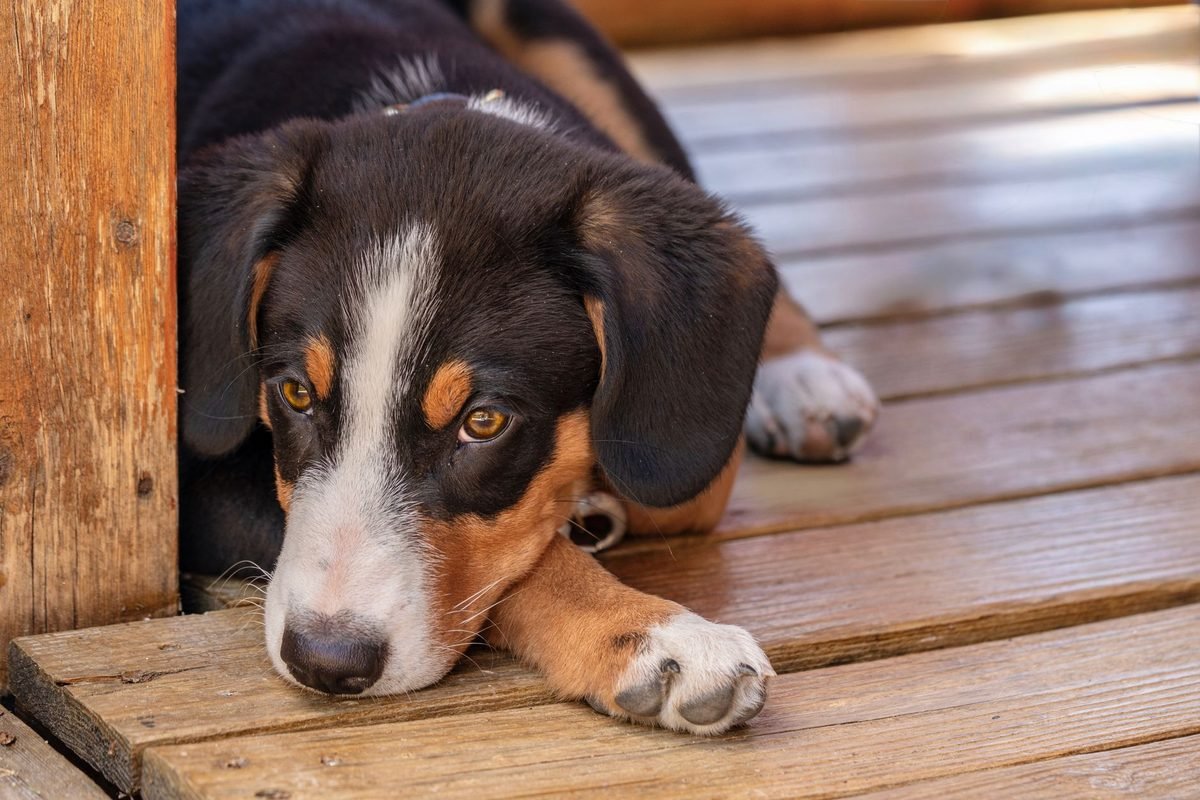
Enter your puppy's breed, current weight, and age to estimate their adult weight.
Calculate My Puppy's Adult Weight →It's not just current weight × a fixed number
A common shortcut is doubling a puppy's weight at a certain age, but that only works loosely and only for a narrow age window. The real driver is what share of adult weight a puppy has typically reached at their current age — and that share depends heavily on what size the puppy will end up being as an adult.
Growth speed by size tier
- Toy (under 10 lbs adult): grows fast and finishes early, usually reaching full size by around 10–11 months.
- Small (10–30 lbs adult): also finishes relatively early, typically by around a year.
- Medium (30–50 lbs adult): moderate pace, usually done growing by around 14 months.
- Large (50–100 lbs adult): slower and steadier, often still filling out until around 18 months.
- Giant (over 100 lbs adult): the slowest to mature, commonly still growing until close to 2 years old.
This is the opposite of what a lot of owners expect — the biggest dogs take the longest to get there, not the shortest.
Why mixed breeds are harder to predict
If you know the breed, its typical size tier does most of the work. For mixed-breed puppies, the best approach is estimating the closest size tier based on current build, paw size, and parentage if known — genetics and littermate size can shift the outcome, so treat any estimate as a ballpark rather than a guarantee.
Estimate your puppy's adult weight
Use the Puppy Weight Calculator to get a specific number based on your puppy's breed (or closest size tier), current weight, and age in weeks. To see the full growth curve laid out by week and size, check the Puppy Growth Chart by Size. And if you're wondering when the growing actually stops, see When Do Puppies Stop Growing?
The methods people use, and how well they work
Several rules of thumb circulate. They are not equally reliable, and it helps to know which is which.
- Percentage-of-adult-weight method. The most accurate general approach, and what our calculator uses. It relies on the observation that puppies of a given size tier have reached a fairly predictable share of adult weight at a given age.
- Double the 16-week weight. Reasonable for medium breeds, less so at the extremes. It tends to underestimate giant breeds, which keep growing much longer, and overestimate some toy breeds.
- Paw size. Popular and weak. Disproportionately large paws do loosely suggest more growth to come, but the correlation is not tight enough to produce a number.
- Parent weights. Genuinely useful when both parents are known, which is the main advantage of buying from a breeder over adopting an unknown mix. Puppies commonly land near the average of the two, with males tending toward the larger parent.
Why size tier drives everything
The key insight is that puppies do not all follow one growth curve scaled up or down. Smaller breeds finish faster. A toy-breed puppy may be at 90 percent of adult weight by eight months, while a giant-breed puppy at eight months may be barely past 60 percent with a year of filling out still ahead.
This is why applying a single formula across all breeds produces poor results, and why the first question any decent estimate asks is what size tier the puppy belongs to.
What makes an estimate less reliable
- Unknown mixed breeds. Without knowing the parents, size tier is a guess, and the estimate inherits that uncertainty. A DNA test can help meaningfully here.
- Very young puppies. Estimates from under 8 weeks are unreliable; accuracy improves substantially from about 16 weeks.
- Overweight or underweight puppies. The method assumes a healthy body condition. An overfed puppy will produce an inflated adult estimate.
- Early spay or neuter. Removing sex hormones before growth plates close can delay closure and result in a slightly taller adult dog, an effect documented particularly in larger breeds.
Bigger than expected is not always good news
Owners often treat a high estimate as a bonus. For large and giant breeds it is worth thinking about differently: rapid growth is a risk factor for developmental joint disease, and the goal with a big puppy is steady, moderate growth rather than maximum size.
If your puppy is tracking well above expectation, check body condition before celebrating. The difference between a large-framed puppy and an overfed one matters a great deal for its joints at age eight.
Common questions
Does paw size predict how big a puppy will get?
Only loosely. Disproportionately large paws suggest more growth remains, but the correlation is too weak to produce a useful number. Current weight, age in weeks, and breed size tier give far better estimates.
At what age can I predict my puppy's adult size accurately?
Estimates become reasonably reliable from around 16 weeks and improve from there. Predictions from under 8 weeks are unreliable, and unknown mixed breeds carry more uncertainty because size tier has to be guessed.
Does neutering affect how big my dog gets?
It can. Removing sex hormones before growth plates close may delay closure and produce a slightly taller adult dog, an effect documented particularly in larger breeds. Discuss timing with your vet, since it involves other trade-offs too.